



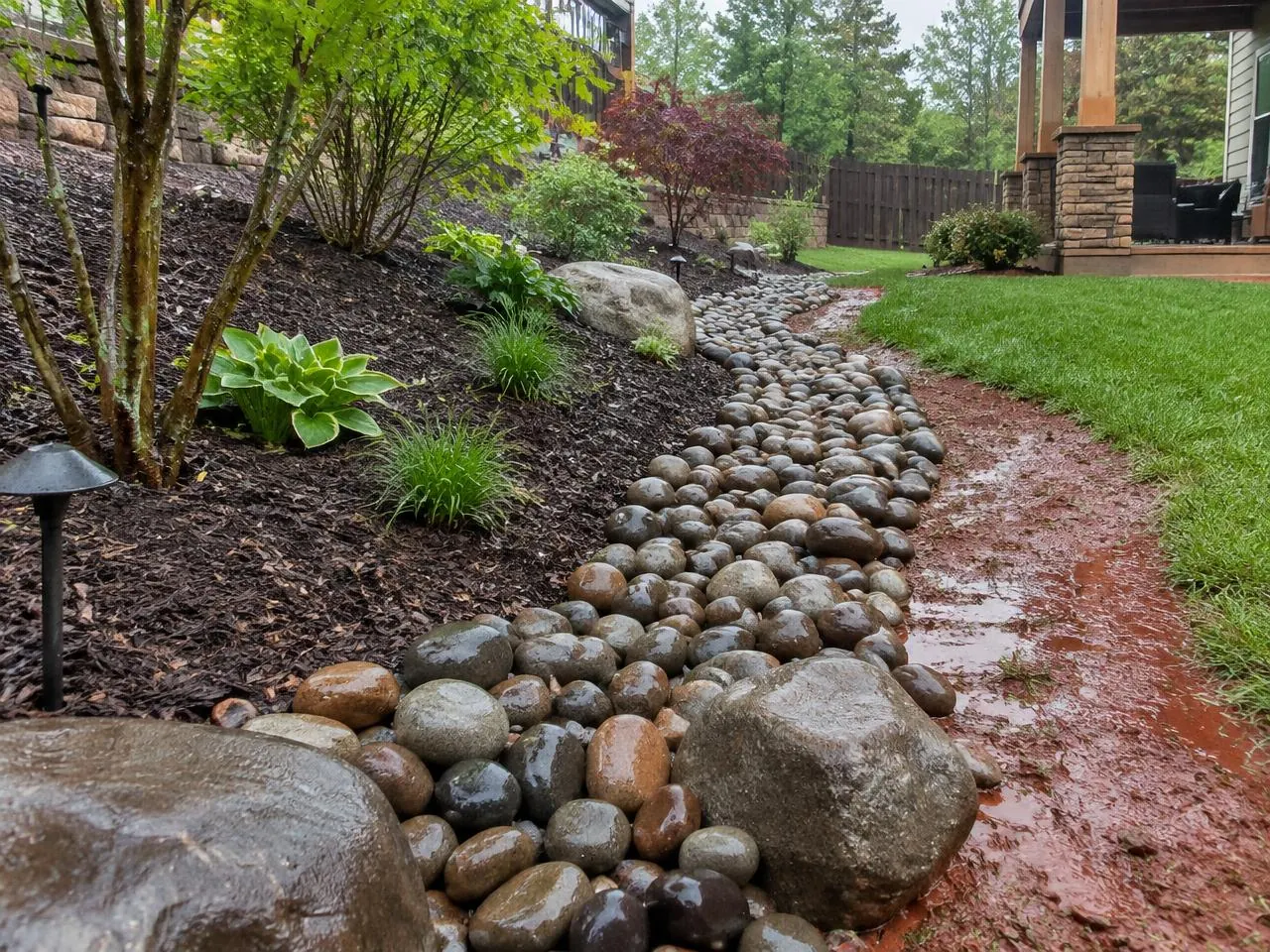
The red clay under most Alpharetta and Cumming lawns drains slowly. After a heavy rain, water sits on the surface, runs across the yard instead of soaking in, and collects in low spots against foundations and fences. Left alone, it drowns turf, washes out beds and can find its way into crawl spaces.
The usual warning signs are a soggy patch that stays wet for days, moss where grass used to grow, mulch that washes onto the driveway, and bare streaks on slopes where runoff has cut a channel.
The right fix depends on where the water comes from and where it can go. Downspout extensions move roof water away from the house. A French drain, a gravel trench with perforated pipe, collects water from a wet area and carries it to a safe outlet. A stone river does the same job on the surface, finished with river rock so it looks intentional. On some lots, regrading a low spot is all that is needed.
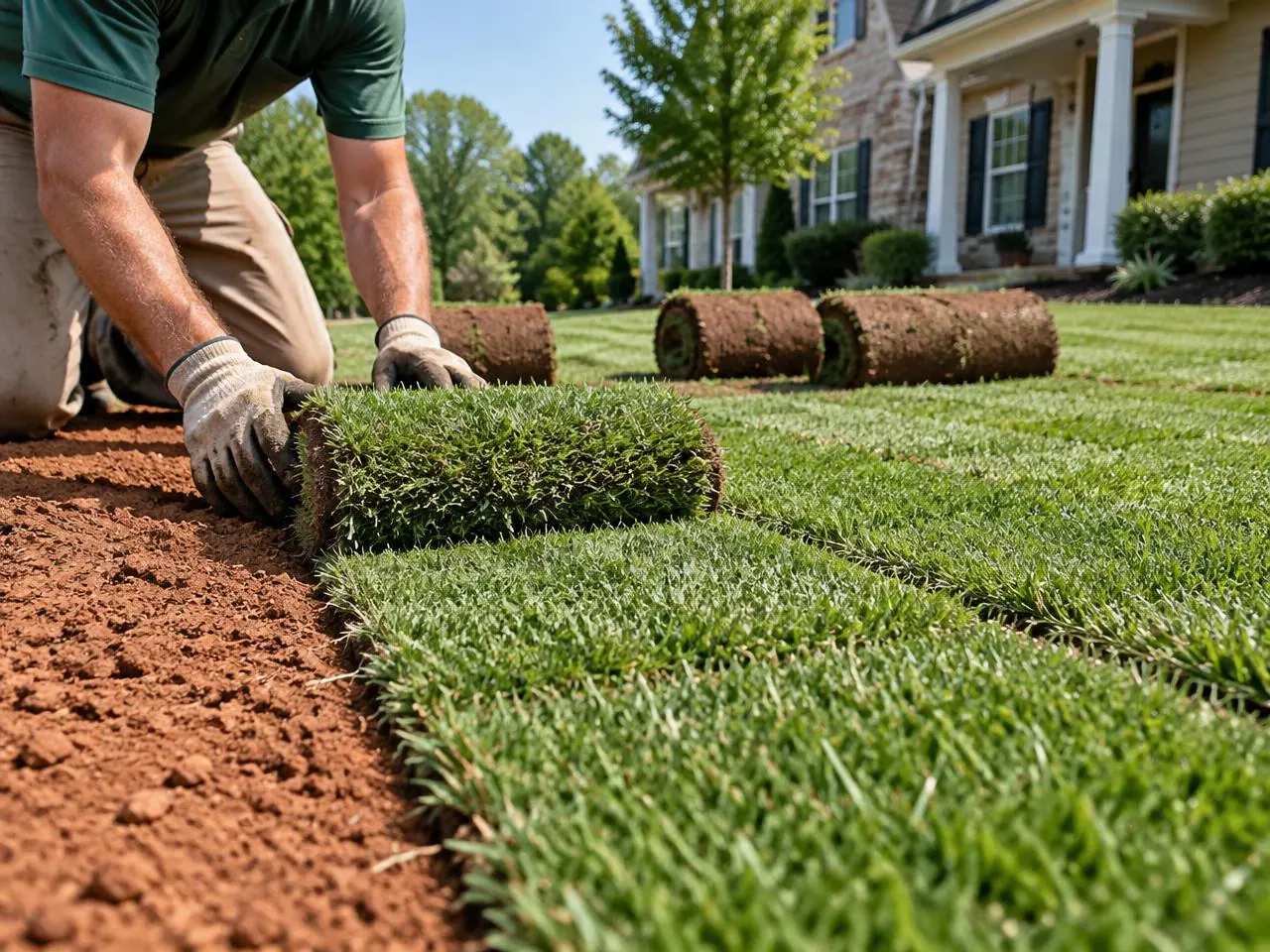
Drainage work pairs naturally with other projects. A retaining wall can hold back a slope while a drain behind it keeps water from building up, and new sod establishes far better once the ground beneath it stops staying saturated.
If part of your yard never seems to dry out, we will walk it with you after a rain, find where the water collects and put together a plan. Call 678-735-1270 or send us a message from the contact page.
Ready to transform your property?
Give us a call and schedule a consultation today. Serving Alpharetta, Cumming, Forsyth County and the North Metro Atlanta area.